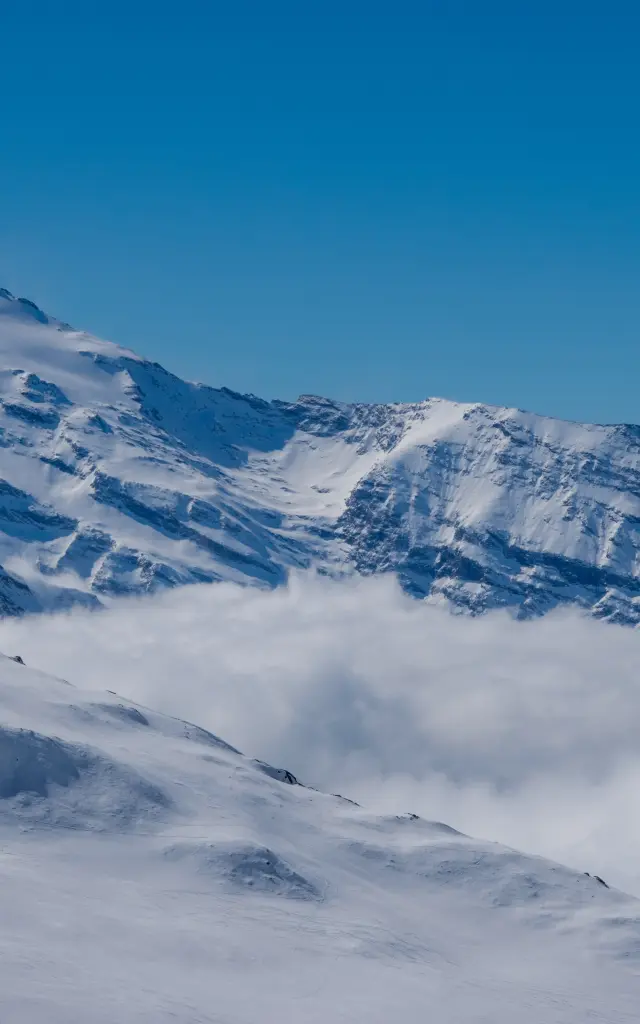
Snow-covered landscape 7850 Val d’Isère Tourism Yann Allegre
©

Snow-covered landscape 7850 Val d’Isère Tourism Yann Allegre

|

Yann ALLEGRE

Guidelines for the mountains

At an altitude of 1,850 metres, the mountains are part of everyday life. They also dictate their own rules. These guidelines will help you to protect yourself, respond in the event of an emergency and find the right resources at the right time.

Before you leave the three checks that make all the difference

Hiking, skiing, mountain biking, trail running, mountaineering: whatever your activity, these three simple steps are worth more than any advice.

Check the weather forecast and the weather advisory

The weather changes quickly at high altitudes. A clear sky in the village may conceal a storm at 2,800 metres. Before every outing, check the local weather forecast.

Let a loved one know your route

Tell someone you trust your planned route, your departure time and your estimated time of return. If there is a problem, this will enable the emergency services to respond quickly.

Adapting your kit for the outing

High-top shoes, warm layers, water, a head torch, a fully charged battery: the minimum kit required varies depending on the activity and the season. If in doubt, the Tourist Office and the guides’ offices will be able to advise you.

Training free talks

In Val d’Isère, Franck Paragot, a ski instructor and trainer atANENA (the National Association for the Study of Snow and Avalanches), runs free talks on ‘snow and off-piste safety’ at the Maison de Val.

Understanding the environment, avalanche mechanics, equipment, appropriate behaviour and knowing when to turn back: in the space of an evening, he covers the essential basics needed for any off-piste decision-making. A community-led initiative, supported by the tourist office, open to everyone aged 14 and over.

Good to know

“Guides are not guarantors of safety, but managers of insecurity.” — Franck Paragot

In winter Snow, avalanches, cold weather

Most mountain accidents occur in winter. The guidelines below apply to everyone: skiers, snowshoers and walkers outside the village.

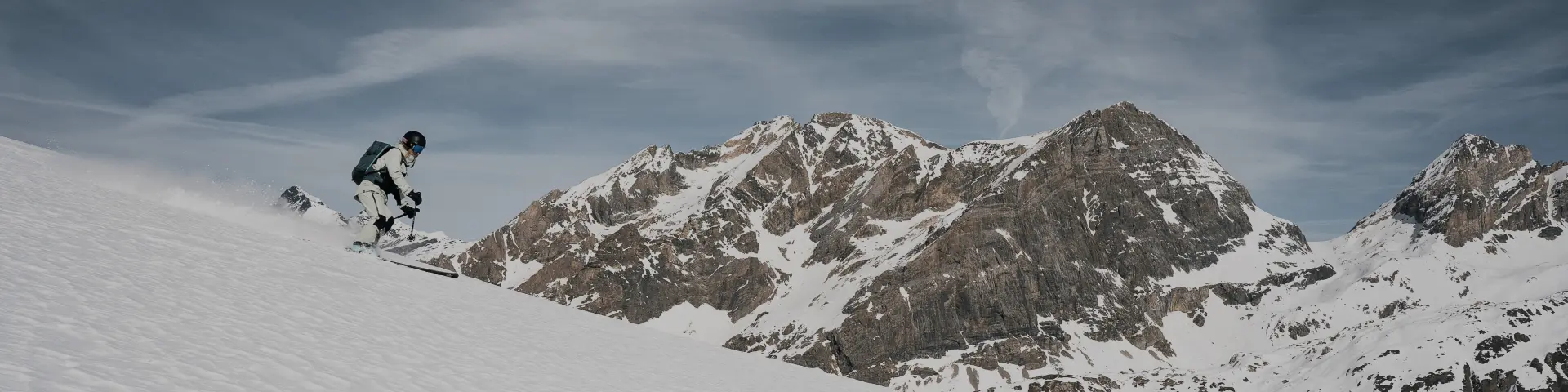
Off-piste and ski touring ASSESSING THE RISK

Skiing off the marked slopes is at your own risk.

✅ Before you set off:

  • Check today’s BERA report and identify the risk level (1 to 5).
  • Take your avalanche transceiver, shovel and probe with you, and make sure you know how to use them quickly. Free training courses are available on this subject.
  • Never set off alone.
  • Cancel the trip if any member of the group is not properly equipped.
  • Be accompanied by a guide who knows the terrain.

 📄 Read the BERA:

  • 🟢 Level 1: Generally favourable conditions – The snowpack is well stabilised on most slopes.
  • 🟡 Level 2:Instability mostly limited to a few slopes – On a few sufficiently steep slopes, the snowpack is only moderately stable.
  • 🟠 Level 3: Marked instability, sometimes on many slopes – On many sufficiently steep slopes, the snowpack is only moderately to weakly stabilised.
  • 🔴 Level 4: Severe instability on many slopes – The snowpack is only weakly stabilised on most sufficiently steep slopes.
  • ⚫️ Level 5: Very unfavourable conditions – Instability in the snowpack is widespread.

Obey the road signs SKI AREA

Within the ski area, closed runs, marked zones and warning flags are not mere suggestions. The Val d’Isère Cable Car Company (STVI) and the ski patrollers ensure the safety of the open runs. Outside these areas, you are on your own.

IF YOU ARE CAUGHT In an avalanche

  • Move sideways as soon as you see the first signs.
  • Get rid of your poles and skis if you are swept away.
  • Protect your airways by holding one arm up in front of your face.
  • Do not shout under the snow: conserve your breath.
  • Activate your avalanche transceiver and wait for the rescue team.

If you are a witness: immediately call 112 or the PGHM (see numbers at the bottom of the page).

In summer Hiking, wildlife, thunderstorms

The warmer months draw people out onto the trails. They come with their own risks, which are often underestimated.

Hiking safely

Set off early. Mountain thunderstorms often break out in the middle of the afternoon.

Stay on the marked paths.

Don’t overestimate your abilities and allow plenty of time so that you don’t have to cover the last few kilometres after dark.

Crossing a herd Good habits when handling Patou dogs

During the summer, you’re likely to come across herds guarded by Patou dogs – those large, white dogs with an impressive build. Here’s how to anticipate their behaviour, understand them, and adopt the right approach for both you and them.

Four essential tips:

  • Walk around the herd at a distance whenever possible.
  • Do not run, shout or stare the dog in the eyes.
  • Do not stroke the dog, and do not threaten it with a stick.
  • If you’re on a bike or a mountain bike, get off and push your bike.

Observing wildlife WITHOUT DISTURBING HER

Ibex, chamois, marmots and bearded vultures: the wildlife of the Vanoise National Park can be observed from a distance. Approaching the animals puts them at risk, particularly during the breeding or wintering seasons.

Thunderstorms at high altitude ACT QUICKLY

🌩️ If a storm is approaching whilst you are at high altitude:

  • Descend quickly below the ridge line.
  • Stay away from isolated trees, watercourses and pylons.
  • Crouch down with your feet together on a rucksack if you cannot find shelter.
  • Discard any long metal objects (sticks, ice axes).

At a glance Emergency numbers

European General Emergency 112
SAMU 15
Gendarmerie 17
Fire brigade 18
PGHM Haute Tarentaise 04 79 07 01 10

Good to know

How to report an emergency effectively

  • Where you are (town, area, estimated altitude, landmarks).
    Note: the Vire app in Val d’Isère shows your real-time geolocated position (latitude and longitude).
  • What: the nature of the emergency
  • Who: number of people affected, apparent condition
  • How long ago the incident occurred
  • Your callbacknumber

Do not hang up until the emergency services tell you to.

Stay informed Val d'Isère’s alert channels

Val d’Isère uses a number of channels to alert you in the event of an immediate danger.

  • ‘Vivre à Val d’Isère’ mobile app: location-based push notifications in the event of an alert, and real-time tracking of your own location.
  • Radio Val: live broadcasts, frequency.
  • Village noticeboards: information messages in high-traffic areas.
  • Digital display: alerts visible 24 hours a day.
  • Municipal social media: Facebook and Instagram @valdiseremairie.

In the event of a major prefectural alert, the FR-Alert system is automatically triggered on your phone.

The competent authorities

  • PGHM Haute Tarentaise — mountain rescue
  • Vanoise National Park — regulations in the heart of the park
  • Météo-France Montagne — weather and avalanche reports
  • Val d’Isère Tourist Office — route advice, guided tours
  • Val d’Isère Guides’ Office — professional guiding services

Keep up to date with the latest news otherwise

Our social networks

All events, filterable by theme, location and date. Your go-to on Monday mornings to plan your week.

The application Living in Val d'Isère

 Real-time notifications, the programme in your pocket.

Subscribe to the Val Mag

Would you like to receive it in print or digitally?