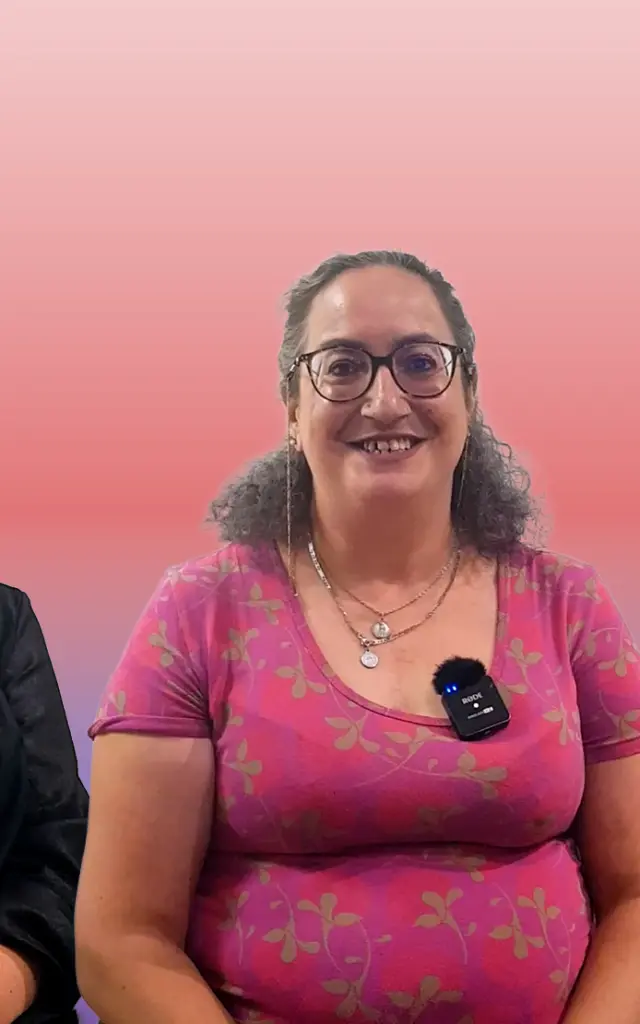
What they say: Michel Moreau, high-mountain guide, working hand in hand with the ski patrollers
What connection do you have with the Régie des Pistes in your work as a guide?
Essentially, they are friendships forged over the 40 years I have spent working as a guide in Val d’Isère during the winter. The on-the-ground knowledge that a pisteur has of their sector is a major asset for a guide or ski instructor who needs to cover that area. I’ve always kept in touch with the pisteurs, as their day-to-day information has been a great help in planning my routes. However, our exchanges have been a two-way process; for my part, I’d share with them any observations I’d made in other parts of the mountain that they didn’t cover. That said, this way of working isn’t adopted by all professionals. Here, as elsewhere, the different ‘castes’ find it a bit difficult to mix…!
In your view, how important are ski patrollers to safety in the mountains, away from the marked runs?
They’re hugely important, of course! Whilst ski patrollers do respond to incidents on the slopes, they’re constantly called upon off-piste and sometimes in areas that are difficult to access. When, at the end of the day in bad weather, they have to go and rescue reckless skiers stranded in the Malpasset Gorges, without being able to use a helicopter, it requires quite remarkable skill, courage and self-sacrifice. As my father used to say, there are some who’ve been awarded the Legion of Honour for far less than that…!
Could you share a memorable anecdote about working with the ski patrollers in Val d’Isère?
Yes, there have been many, such as when a huge avalanche struck the Combe de Cugnaï – which I spotted whilst riding up on the Arselle chairlift – and I reported it to the Solaise sector manager. A few minutes later, Michel Bonnevie called on me to join him as backup at the avalanche site. Given the scale of the incident and the large number of skiers in the valley, it was a miracle that only one person was buried. However, around forty skiers in a state of shock were wandering around the rescue teams, hindering their efforts. So Jean-Pierre Aguilon, who was supervising the rescue operation on site, asked me to gather all these survivors and escort them down into the valley. That’s how I ended up with the largest group I’d ever been responsible for since my military service in the Alpine Chasseurs…!
How do you see the future of ski slope management and mountain safety in the coming years?
To be honest, I can’t really say – so many factors can influence this development – but I do have some hopes. In particular, I’d like to make the slopes safer and move away from the sort of lawless environment they’ve become. It’s quite absurd that, on a day’s ski touring in a high-risk environment, the only moments that worry me are those when I’m using the groomed, open and marked pistes. There’s real work to be done to make them safer, and that doesn’t come down to equipment, but to education. I don’t think it’s a pipe dream, but we need to get serious about it. As for safety in the mountains, it’s the same story: we have the necessary equipment; what’s missing is the right attitude, and once again, this comes down to educating skiers. The mountains are here to stay for a long time to come; there are days and areas when they’re not safe to visit, so with a bit of wisdom and patience, we can go very far and very high.