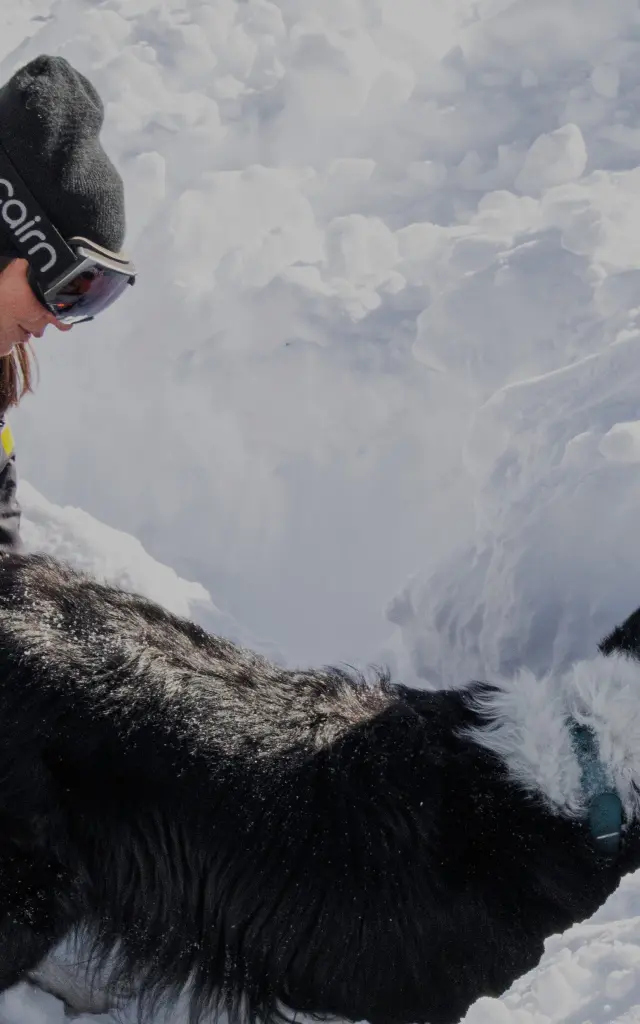
Patous are independent guard dogs, not attack dogs.
Dsc0001
Patous and pastoralism Hiking in the summer pastures of Val d'Isère
At a glance The Patous
Understanding the Patous
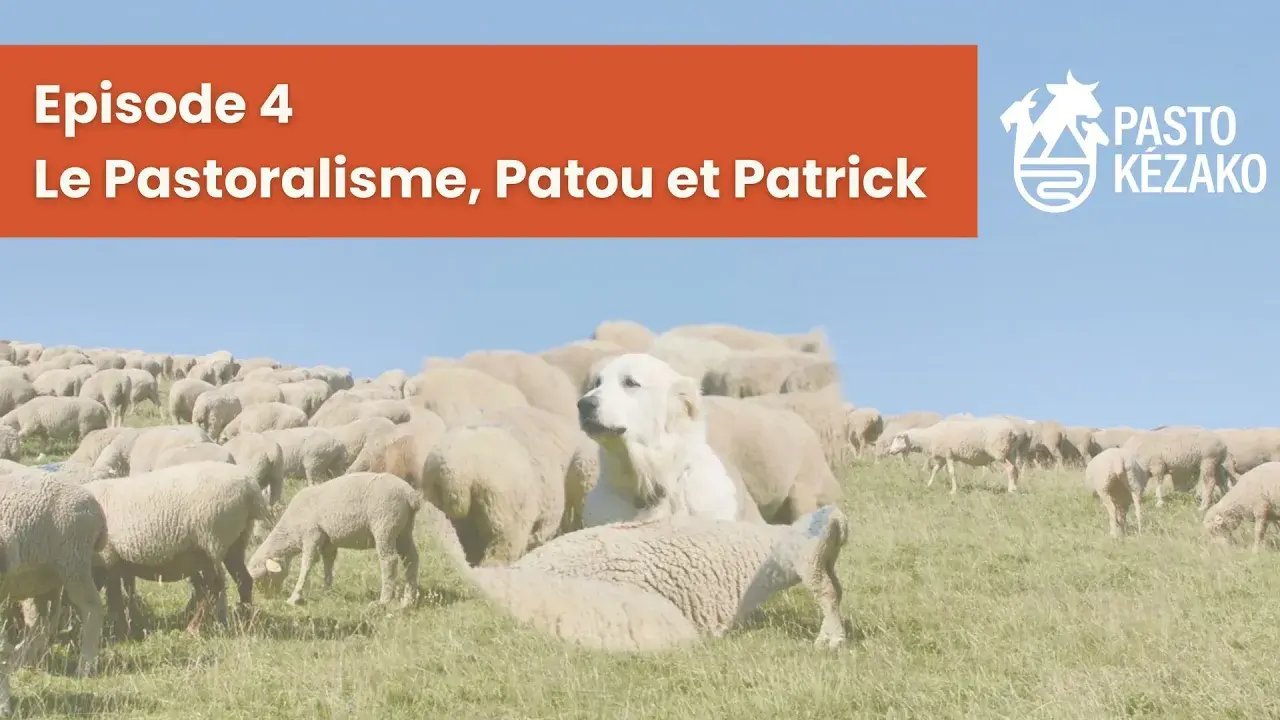
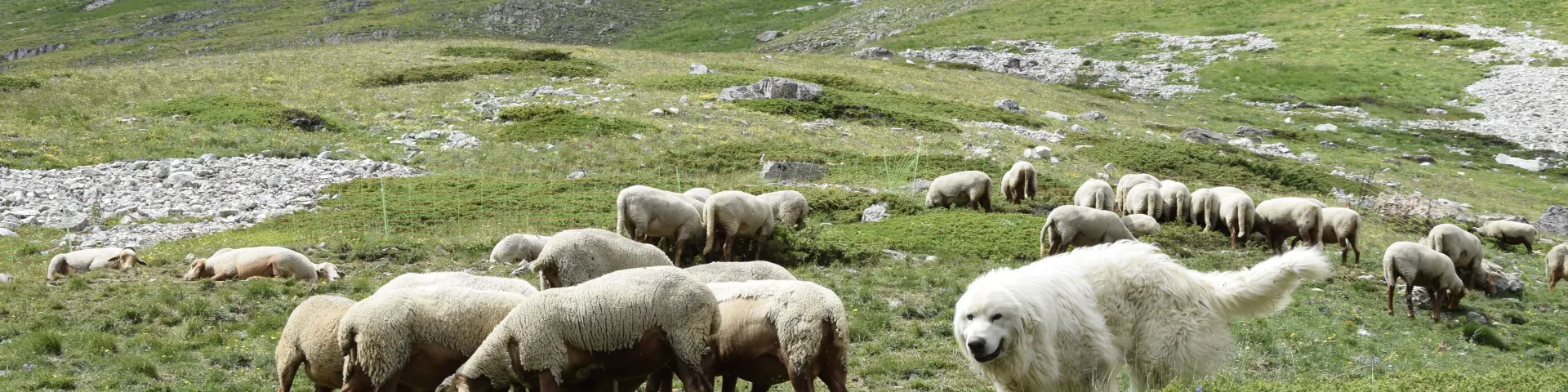
🐕 The return of the wolf to the French Alps has been a reality since the 1990s. To protect their flocks from this renewed threat, farmers have reintroduced guard dogs, of which the Patou is the best known. In Val d’Isère, they are present throughout the summer grazing season, from around June to October.
Strictly speaking, the word ‘patou’ refers to a specific breed, the Pyrenean Mountain Dog, but it is now used to refer to all herd protection dogs: the Pyrenean Mountain Dog, the Maremma-Abruzzese Sheepdog and the Anatolian Shepherd.
They all share a single purpose: to defend the herd against predators (wolves, lynx, bears, stray dogs). In Val d’Isère, the Patous mainly protect flocks of ovine animals (sheep), but also, less commonly than elsewhere, cattle (cows). This dual role is a local speciality.
Placed amongst the sheep from a very young age, the puppy grows up with the flock. It regards the flock as its own. It is the puppy, not the shepherd, who assesses the danger. The shepherd is generally unable to intervene in the event of a confrontation: Patou dogs are, by their very nature, independent.
A Patou is not trained to attack. It is trained to deter, in three stages:
- Detecting movement or a presence from a distance
- Approach to identify and bark
- Interpose itself between the intruder and the flock if the danger persists
In the vast majority of cases, stage 2 is sufficient. The Patou will approach, sniff you, realise that you are not a threat, and move on. An attack will only occur if you are perceived as a direct threat to the flock.
This is why your behaviour is crucial. The bites that occur every year are almost always linked to inappropriate human behaviour: running, shouting, sudden movements, attempting to stroke a lamb, taking a photo too close up, or brandishing a stick.
Before you leave track the herds
The presence of Patou dogs is a factor to take into account when planning your hike, just like the elevation gain or the weather.
Three sectors to watch out for IN VAL D'ISÈRE
In Val d’Isère, Patou dogs are mainly found in the summer pastures across three areas:
- Bellevarde
- L’Arcell
- Le Dôme
These areas are regularly grazed during the summer. If your hike takes you through one of these areas, be prepared for their presence and be alert. MapPatou supplements this information with details of more mobile or occasional herds.
The MapPatou map
🗺️ An interactive map, MapPatou, lists the mountain pastures and summer grazing lands likely to be home to guard dogs in nine Alpine departments, including Savoie. It is updated every season and can be viewed online or via the IGN Rando and Visorando apps .
The Educational Comic
For an accessible and comprehensive introduction, here is an 8-page comic strip that explains, in a humorous and educational way, what a mountain guide does and how to behave. It’s an excellent read to share with children before setting off on a hike.
In the field the right reflexes
👀 As soon as you spot a herd in the distance
- Give the livestock’s grazing or resting areaa wide berth whenever possible. This is the simplest solution and the one that best respects the work of livestock farmers.
- Look out for signs warning of the presence of livestock guard dogs. These are placed at the start of the area by farmers or the local authorities.
- If you are cycling or mountain biking, dismount and push your bike whilst passing through. A fast-moving figure is interpreted as a threat.
- If you are with a pet dog: a three-step procedure
- Be prepared: as soon as you spot a herd in the distance, keep your dog on a short lead and keep it at your feet. A dog off the lead may be perceived as a predator by the Patou.
- If the Patou approaches persistently and a confrontation becomes inevitable: let go of the lead. This is counter-intuitive, but essential. A dog on a lead cannot adopt submissive postures, and pulling on the lead only exacerbates the conflict. Let the two dogs size each other up naturally; they will sort out their differences amongst themselves.
- Above all, do not intervene physically. Do not pick your dog up: the Patou might interpret this gesture as a challenge or a threat to the herd. Once you are away from the herd, calmly put your dog back on the lead and carry on your way.
🐕 When the Patou comes up to you
- Don’t panic, don’t run, don’t shout. Running will encourage the dog to chase you. Sudden movements are interpreted as aggression.
- Stop or move forward very slowly. The dog will come to check you out. Once it’s reassured, it’ll go back to its flock of its own accord.
- Don’t stare it in the eyes. For a Patou, this is a challenge. Turn your head away, yawn conspicuously, speak to it calmly: these are calming signals that it understands.
- Do not stroke it, feed it or take close-up photos of it. Any unusual interaction may be misinterpreted.
- Do not threaten it with a stick or throw stones at it. You wouldonly emphasise your threatening nature and trigger exactly what you are trying to avoid.
🚶 If you have no choice but to go through
- Take a wide detour rather than walking through the flock.
- Do not cross the electric fences marking the boundaries of sheep pens. Keep well clear of them: a frightened sheep may alert the whole flock, and therefore the dog.
- If the dog follows you whilst barking, this is normal: it is doing its job of escorting you until you are far enough away from the flock. Carry on calmly. Ignore it without openly turning your back on it.
👶 Special cases
- If you have children: keep them by your side and explain to them beforehand that a Patou is not a soft toy. No running, no shouting, and no attempts to stroke it. The comic is an excellent way to prepare them.
- If the dog is asleep: don’t startle him. Approach noisily from a distance to signal your presence before he wakes up. A Patou that’s startled awake may react sharply.
- If the situation becomes stuck: turn back calmly. No walk is worth a bite.
Keep up to date with the latest news otherwise
Our social networks
All events, filterable by theme, location and date. Your go-to on Monday mornings to plan your week.
The application Living in Val d'Isère
Real-time notifications, the programme in your pocket.
Subscribe to the Val Mag
Would you like to receive it in print or digitally?